
Copper Peptides for Women Over 40: Can They Really Help With Wrinkles and Firmness?
If you’ve been paying more attention to your skincare routine lately, you’ve probably noticed that there’s always a new ingredient promising smoother, firmer, younger-looking skin.
Retinol, vitamin C, hyaluronic acid… the list goes on!
But there’s another skincare ingredient that’s been getting attention in the anti-aging world: copper peptides.
You may have seen them in serums, firming creams, or products designed for mature skin. They’re often talked about for their potential to support collagen, improve skin texture, and help skin look healthier and more refreshed.
But are copper peptides actually worth adding to your routine, especially after 40?
Let’s take a closer look at what they are, what they may do for your skin, and how to decide whether they’re right for you.
Affilate Disclosure: This post may contain affiliate links. If you purchase something through one of these links, I may earn a small commission at no additional cost to you. I only recommend products I believe may be useful to my readers.
What Are Copper Peptides?
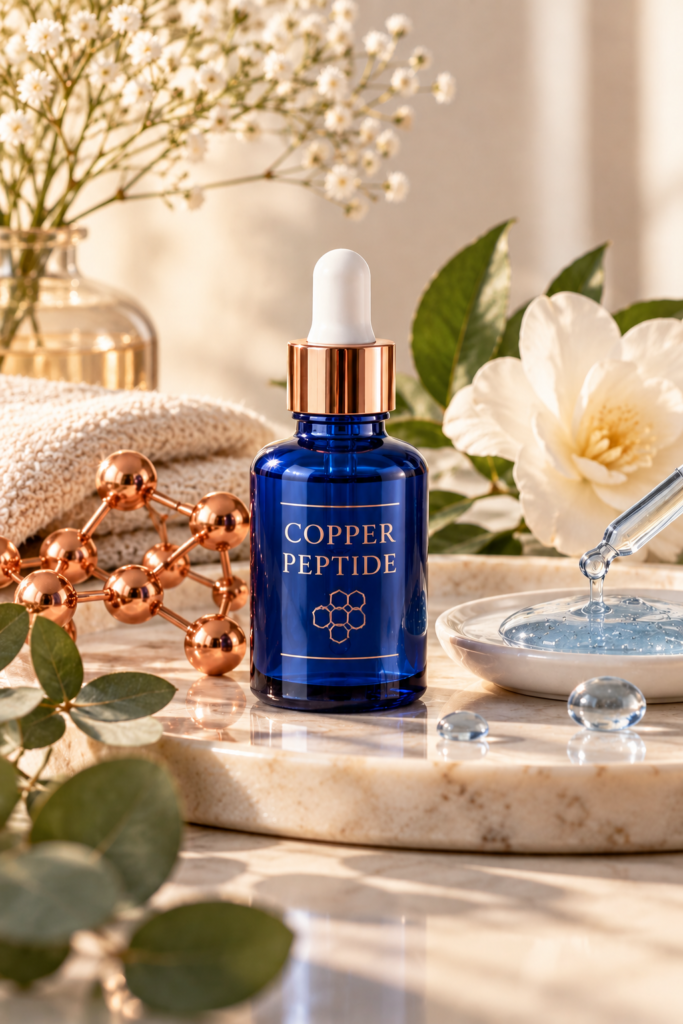
Copper peptides are small compounds made from amino acids that can bind to copper. One of the best-known forms used in skincare is called GHK-Cu, also listed on some ingredient labels as Copper Tripeptide-1.
That might sound a little scientific, but here’s the simple version: peptides are small building blocks that can play a role in how our skin functions.
Copper peptides have attracted interest because researchers have studied their role in skin repair and processes associated with collagen and the skin’s supporting structure.
Collagen is a protein that helps give skin its firmness and structure. As we get older, collagen production and the way our skin maintains itself change. Over time, this can contribute to fine lines, wrinkles, and a loss of firmness.
This is one reason copper peptides have become an interesting ingredient in skincare for women over 40.
It’s important to keep expectations realistic, though. Promising laboratory research doesn’t automatically mean that every copper peptide serum will produce noticeable results on your face.
Why Does Skin Change After 40?
If your skin doesn’t look or feel quite the same as it did in your twenties or thirties, you’re not imagining things.
As we age, several changes can affect our skin:
- Fine lines and wrinkles may become more noticeable.
- Skin can start to look less firm or feel less elastic.
- Dryness may become more common.
- Sun damage and uneven skin tone may become more visible.
- Skin may take longer to recover from irritation or environmental stress.
Of course, everyone’s skin is different. Genetics, sun exposure, hormones, lifestyle, and your existing skincare habits all play a role.
The good news? A thoughtful skincare routine can help support healthy-looking skin at any age.
And that’s where ingredients like copper peptides may have a place.
2 Potential Benefits of Copper Peptides for Mature Skin
1. Support Skin Firmness
One of the main reasons copper peptides are used in anti-aging skincare is their potential relationship with collagen and other components of the skin’s supporting structure.
Collagen helps skin maintain its structure, so it’s easy to understand why ingredients that may influence collagen-related processes attract so much attention.
Copper peptides are promising, but the evidence that topical products noticeably improve firmness in real-world use is still limited.
Think of them as a possible addition to a well-rounded skincare routine, rather than a miracle treatment for sagging skin.
2. They’re an Interesting Option if You Want to Explore Peptides
Maybe you’ve already tried retinol. Perhaps vitamin C is part of your morning routine, and now you’re curious about something different.
Copper peptides offer another ingredient to explore.
They aren’t necessarily better than retinol, and they don’t need to replace ingredients that are already working for you. Instead, they may be worth considering if you’d like to add a peptide-based serum to your routine.
The key is choosing products based on your skin’s needs, not simply because an ingredient is trending online.
Copper Peptides vs. Retinol: Which Is Better After 40?
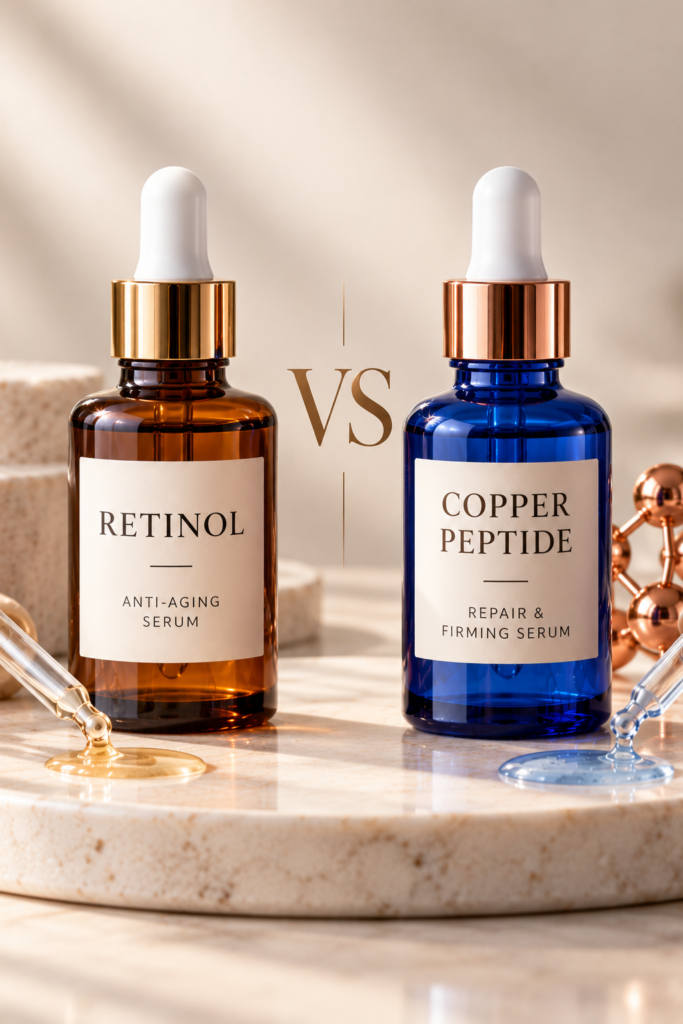
This is a common question, and the answer depends on what you’re hoping to improve.
Retinoids, including retinol, have a more established evidence base for improving certain signs of photoaging, including fine wrinkles and uneven skin texture.
Copper peptides are interesting because of their potential role in skin repair and collagen-related processes, but the clinical evidence for visible anti-aging benefits from topical copper peptide products is less developed.
Here’s a simple comparison:
| Copper Peptides | Retinol | |
|---|---|---|
| Main interest | Skin repair and collagen-related processes | Skin renewal and signs of photoaging |
| Evidence for visible anti-aging results | Limited | Better established |
| Potential irritation | Depends on the formula and your skin | Can cause dryness, redness, and peeling |
| Best approach | Introduce gradually and assess your skin | Start slowly and build tolerance |
You don’t necessarily have to choose one forever. The right routine depends on your skin, your other products, and how well you tolerate active ingredients.
If you’re already using retinol successfully, you may not need to replace it with copper peptides. And if your skin is sensitive, adding several new products at once can make it harder to figure out what’s helping or causing irritation.
Be sure to read my complete retinol guide HERE.
How to Use a Copper Peptide Serum
Morning Routine:
Step 1: Cleanse gently.
Use a cleanser that leaves your skin feeling comfortable rather than tight or dry.
Step 2: Apply your copper peptide serum.
Follow the directions on the product label. Some serums are designed for use once daily, while others may have different instructions.
Copper Peptide Serum I recommend → Copper Peptides Serum for Face with Liposomal 2% GHK-Cu, Hyaluronic Acid
Step 3: Moisturize.
Choose a moisturizer that suits your skin type. If your skin is dry, a formula containing ingredients such as ceramides or glycerin may help support hydration.
Step 4: Finish with sunscreen.
Daily broad-spectrum SPF 30 or higher is one of the most useful steps in an anti-aging skincare routine. It helps protect against UV damage that contributes to wrinkles and uneven pigmentation.
You can also use a copper peptide serum at night if that fits the product’s directions and your existing routine.
Can You Use Copper Peptides With Retinol?
Possibly, but you don’t need to layer every active ingredient together to get a good result.
If you’re already using retinol, consider introducing only one new product at a time. You could use the products at different times of day or on alternate evenings, depending on their instructions and your skin’s tolerance.
Some skincare brands recommend keeping copper peptides separate from certain strong exfoliating acids or low-pH vitamin C formulas. Compatibility can depend on the specific formulas, so check the manufacturer’s directions rather than assuming every combination is unsuitable.
If you experience persistent redness, burning, or irritation, stop using the new product and reassess your routine.
What Should You Look for in a Copper Peptide Serum?
Not every product marketed as a peptide serum contains the same ingredients or has the same formulation.
Here are a few things worth checking before you buy.
1. Look at the ingredient list.
Copper Tripeptide-1 is a commonly used cosmetic ingredient name associated with copper peptides. Check the full ingredient list rather than relying only on claims printed on the front of the bottle.
2. Choose a formula that suits your skin.
If your skin tends to be dry or sensitive, you may prefer a serum with moisturizing ingredients and without a long list of potentially irritating extras.
3. Don’t assume a higher percentage is always better.
There isn’t a universally established concentration that guarantees visible anti-aging results from topical copper peptides. A product’s overall formulation matters, too.
4. Be cautious with dramatic promises.
Claims such as “erases wrinkles overnight” or “rebuilds all your collagen” should raise questions. No serum can stop the natural aging process, and good skincare marketing should not promise unrealistic results.
5. Consider the packaging and product directions.
Follow the manufacturer’s storage and usage instructions, and choose products from reputable sellers that clearly identify their ingredients.
My Final Thoughts: A Little Curiosity, Realistic Expectations
Getting older doesn’t mean you have to give up on skincare goals. It simply means learning what your skin needs now and choosing products that make sense for you.
If you’re curious, try a well-formulated serum, introduce it gradually, and pay attention to how your skin responds. Give your routine time, and don’t forget the skincare step that matters every single day: sunscreen.
Because the goal isn’t to look like someone else or turn back the clock. It’s to help your skin look healthy, feel comfortable, and make you feel good at every age.
Have you tried copper peptides in your skincare routine, or are you still deciding whether they’re worth it?
I’d love to hear what you think!
Disclaimer: This article is for general informational purposes only and is not a substitute for personalized medical advice. If you have a skin condition, persistent irritation, or questions about combining active ingredients, consult a qualified dermatologist.
With Love,
Agnes